Pyloric Stenosis Surgery: Restoring a Child’s Health
Pyloric stenosis is a condition in infants that causes severe, projectile vomiting. It happens when the pylorus—the muscle at the lower end of the stomach—thickens and narrows, preventing food from passing into the small intestine. This is a critical issue that requires immediate attention from a Child Specialist Surgeon or Pediatric Surgeon.
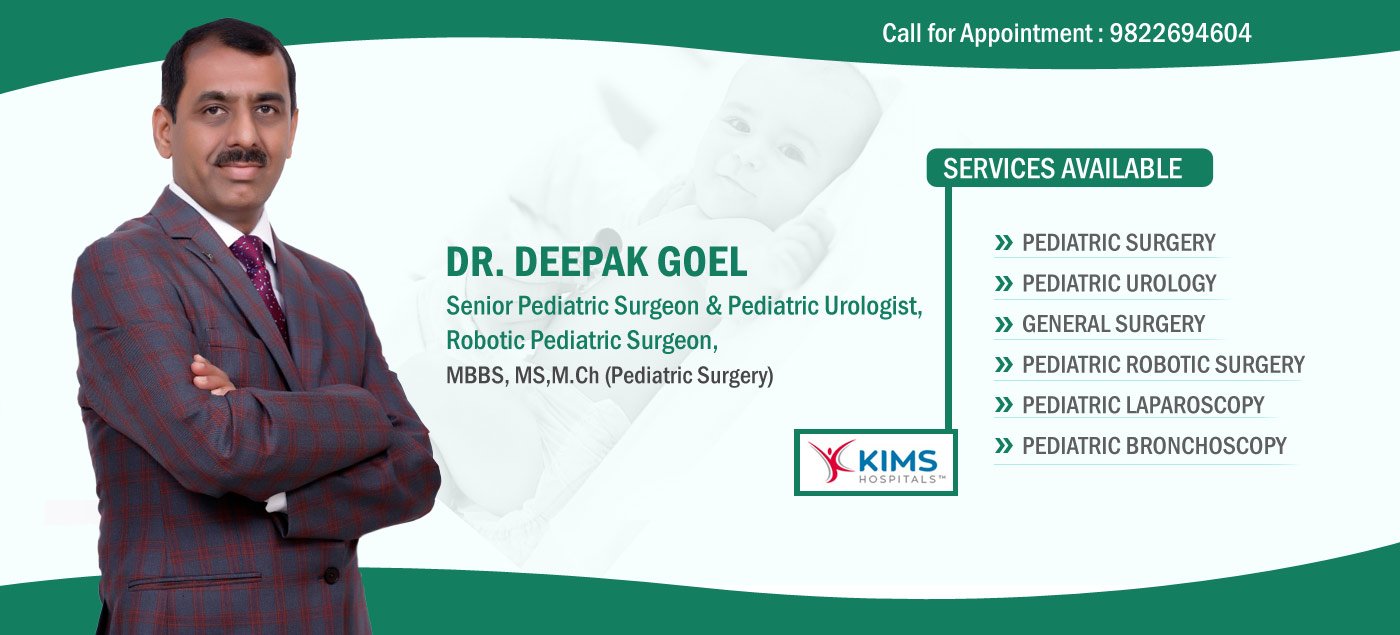
Expert Pediatric Care with Dr. Deepak Goel
Dr. Deepak Goel is a Senior Consultant Pediatric Surgeon & Pediatric Urologist in Nagpur with extensive experience in both traditional and advanced surgical techniques, including Robotic Pediatric Surgery. He holds an MBBS, MS, and M.Ch (Pediatric Surgery) and is well-versed in complex neonatal and pediatric cases. His expertise covers a wide range of procedures from Neonatal Omphalocele repair and Pyloric stenosis surgery to Pediatric Liver surgeries and Pediatric Hernias Treatment. His practice is a key resource for families seeking specialized care for their children, including complex procedures like Robotic pyeloplasty in children, Wilms tumor surgery, and Neuroblastoma surgery in children.
Symptoms and Causes
The most common symptom of pyloric stenosis is forceful, projectile vomiting, which typically begins between 2 to 8 weeks of age. Unlike regular spitting up, this vomiting is forceful and can clear several feet. Other symptoms include:
- Dehydration
- Weight loss or failure to gain weight
- Fewer wet diapers and bowel movements
- Abdominal contractions or “waves” as the stomach tries to force food past the narrowed pylorus
The exact cause of pyloric stenosis isn’t fully understood, but it is believed to have both genetic and environmental components. It is more common in first-born male babies and can be treated by a Best Pediatric Surgeon.
The Surgical Procedure: Pyloromyotomy
The definitive treatment for pyloric stenosis is a surgical procedure called a pyloromyotomy. This is a relatively straightforward operation performed by a Pediatric Laparoscopic Surgeon or Neonatal Surgeon.
- Procedure: During the surgery, the surgeon makes a small incision in the abdomen. Using a laparoscope and specialized instruments, they cut through the outer layers of the thickened pyloric muscle, allowing the inner lining to bulge out. This relieves the obstruction and allows food to pass freely from the stomach to the intestine. The procedure does not require cutting into the stomach’s inner lining.
- Techniques: The surgery can be performed using an open method or a minimally invasive approach like Pediatric Laparoscopic Surgery. The latter is often preferred as it results in less scarring, less pain, and a faster recovery. A Pediatric Thoracoscopic Surgeon or Neonatal Laparoscopic Surgeon can also be involved in managing related conditions.
Post-Operative Care and Recovery
After a pyloromyotomy, the infant is typically monitored in the hospital for a day or two. Feedings are gradually reintroduced, starting with small amounts. It is normal for some vomiting to continue for a short period after the surgery. Most babies recover quickly and are able to feed normally, gaining weight and thriving.
FAQs on Pyloric Stenosis Surgery
Q1: Is pyloric stenosis surgery a major operation? A: A pyloromyotomy is considered a routine and low-risk procedure for a qualified Pediatric Surgeon. The success rate is very high, and complications are rare.
Q2: Can pyloric stenosis be treated without surgery? A: No, surgery is the only effective treatment. Without it, the condition can lead to severe dehydration, malnutrition, and death.
Q3: What other conditions do pediatric surgeons treat? A: Pediatric Surgery is a vast field. A Pediatric Robotic Surgeon or Pediatric Urologist can also treat conditions such as Hirschsprung’s disease surgery, Anorectal malformations surgery, Gastroschisis surgery, Undescended testes surgery, Hydrocele treatment in children, Hypospadias surgery in children, and Pediatric kidney stone removal. They also perform procedures like Neonatal Omphalocele repair and Neonatal Hirschsprung’s disease surgery.
Q4: How long does it take for a baby to recover? A: Most infants recover quickly. They are typically back to full feedings and a normal schedule within a few days to a week after surgery.