Inguinal Hernia Surgery in Children
An inguinal hernia is a common condition in children where a portion of the intestine or other abdominal contents protrudes through a weak spot in the abdominal wall near the groin. While it may not be immediately painful, it can lead to complications if left untreated. This condition requires surgical correction by a Best Pediatric Surgeon or a Child Specialist Surgeon.
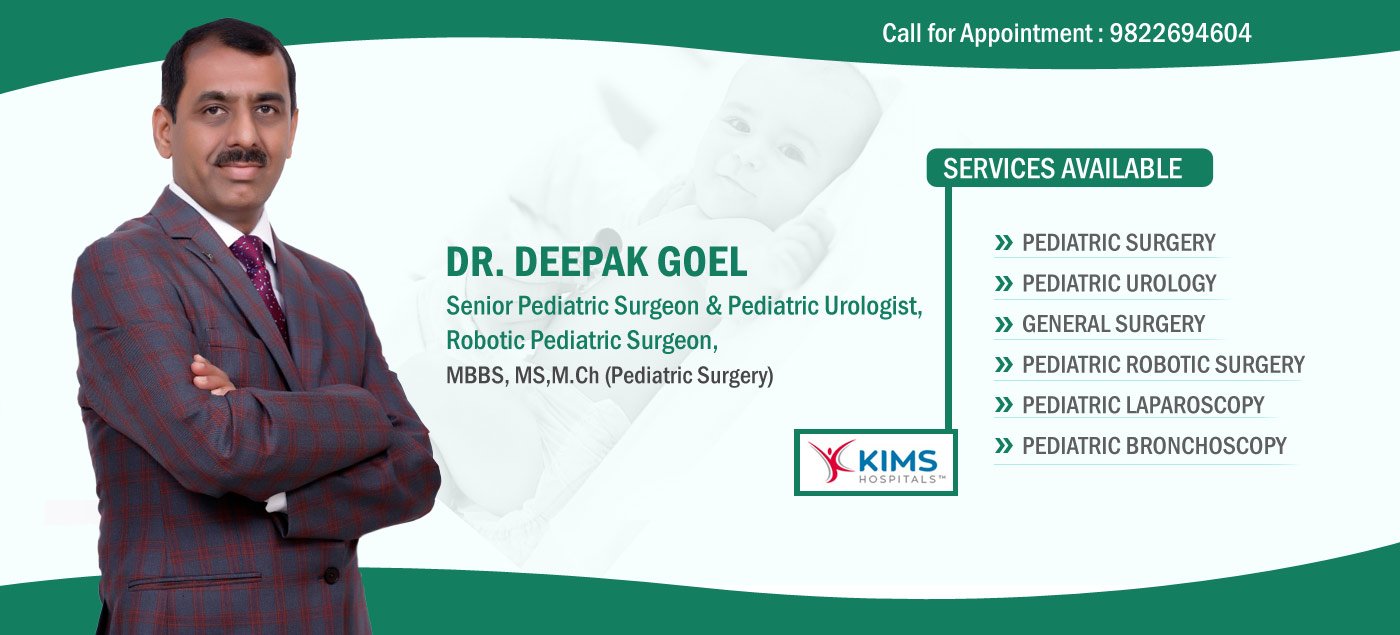
Expert Pediatric Care with Dr. Deepak Goel
Dr. Deepak Goel is a Senior Consultant Pediatric Surgeon & Pediatric Urologist in Nagpur with extensive experience in both traditional and advanced surgical techniques, including Robotic Pediatric Surgery. He holds an MBBS, MS, and M.Ch (Pediatric Surgery) and is well-versed in complex neonatal and pediatric cases. His expertise covers a wide range of procedures, from Pyloric stenosis surgery and pediatric appendix Treatment to Neonatal Hirschsprung’s disease surgery and Pediatric Liver surgeries. His practice is a key resource for families seeking specialized care for their children, including complex procedures like Undescended testes surgery, Teratoma removal in children, and Pediatric fundoplication for GERD.
Symptoms and Causes
The most noticeable symptom of an inguinal hernia is a painless lump or bulge in the groin area, which may extend into the scrotum in boys. This bulge may become more prominent when the child cries, coughs, or strains and may disappear when they lie down or relax. Other symptoms can include:
- A bulge that is firm and tender and can’t be pushed back in (this is a medical emergency known as an incarcerated hernia).
- Pain and discomfort in the groin.
- Fussiness, irritability, and a decreased appetite in infants.
Inguinal hernias in children are not caused by lifting or straining. They occur due to a natural weakness in the abdominal wall that should have closed before birth. This weakness is a remnant of a passage called the processus vaginalis, which normally closes, but if it remains open, it creates a potential space for a hernia to form. This congenital defect is why the expertise of a Neonatal Surgeon is often needed.
The Surgical Procedure: Herniorrhaphy
The definitive treatment for an inguinal hernia is surgery, known as a herniorrhaphy. The procedure is straightforward and has a high success rate. It’s often performed by a Pediatric Laparoscopic Surgeon.
- Laparoscopic Herniorrhaphy: This minimally invasive approach is a common choice. A Pediatric Laparoscopic Surgeon makes a few small incisions to insert a camera and instruments. The surgeon then closes the open passageway (the processus vaginalis) from the inside. This technique is especially useful for checking the opposite side for a potential hernia and results in less pain and a faster recovery.
- Open Herniorrhaphy: In this traditional approach, the surgeon makes a small incision in the groin area to access the hernia sac. The sac is then tied off and removed, and the abdominal wall is reinforced.
A Pediatric Thoracoscopic Surgeon may also be involved in managing related conditions. Both types of surgery for Pediatric Hernias Treatment are very effective.
FAQs on Inguinal Hernia Surgery in Children
Q1: How long is the recovery after hernia surgery? A: Recovery is typically quick. Most children are discharged on the same day as the surgery and can return to normal activities within a few days. The surgeon will provide specific instructions on activity levels and wound care.
Q2: Can a child outgrow an inguinal hernia? A: No. Unlike umbilical hernias, an inguinal hernia will not close on its own and requires surgical intervention to prevent serious complications like incarceration.
Q3: Are there other common conditions a Pediatric Surgeon treats? A: Yes, a Pediatric Surgeon specializes in a wide array of conditions. They perform procedures for Hydrocele treatment in children, Undescended testes surgery, and Hypospadias surgery in children. They also address complex issues like Anorectal malformations surgery, Gastroschisis surgery, Wilms tumor surgery, and Neonatal Omphalocele repair.
Q4: Is robotic surgery an option for pediatric hernias? A: While less common for simple hernias, the use of a Pediatric Robotic Surgeon is increasing for more complex procedures. The precision of Robotic Pediatric Surgery is beneficial for cases such as Robotic pyeloplasty in children and intricate Pediatric Liver surgeries.