Hydrocele Treatment in Children Nagpur
Understanding Hydrocele in Children
A hydrocele is a condition characterized by the accumulation of fluid around the testicle, leading to swelling in the scrotal area. It is a common issue in newborns and infants and usually resolves on its own within the first year of life. However, in some cases, persistent hydroceles may require medical evaluation or surgical intervention by a qualified Pediatric Surgeon or Neonatal Surgeon. In Nagpur, specialized experts like Dr. Deepak Goel offer advanced and minimally invasive hydrocele treatment in children through laparoscopic or robotic pediatric surgery.
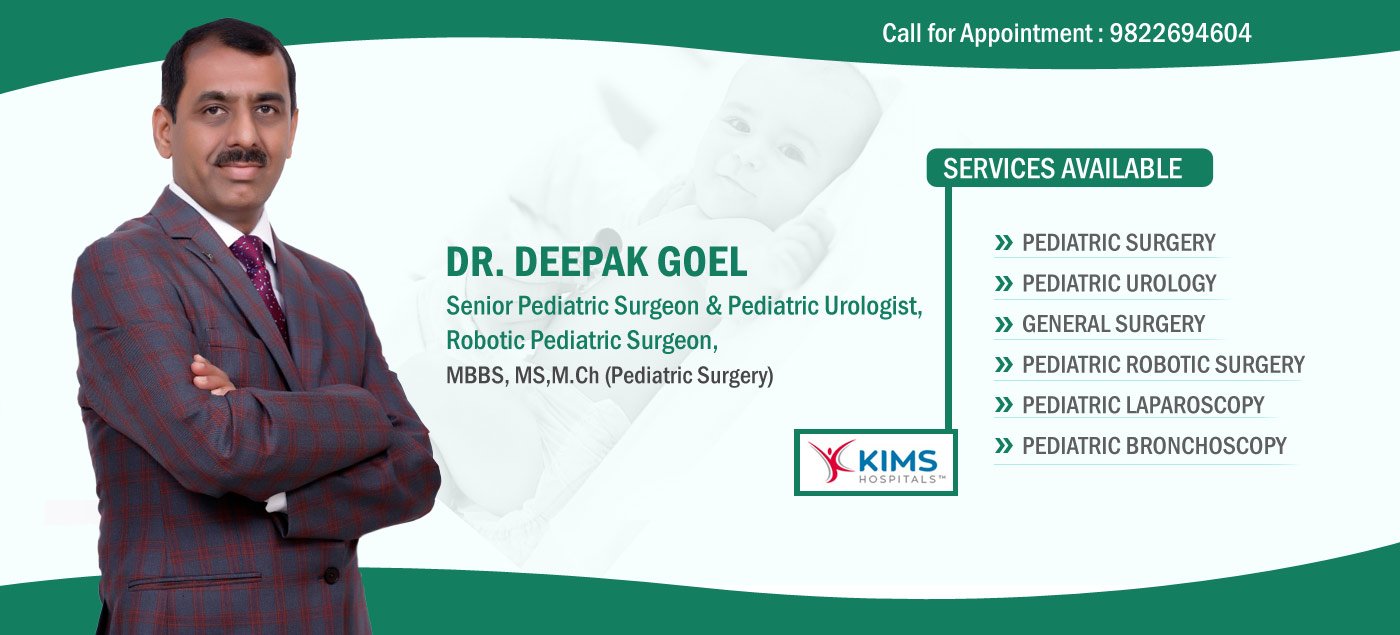
Meet Dr. Deepak Goel – Senior Consultant Pediatric Surgeon in Nagpur
Dr. Deepak Goel is a highly reputed Senior Consultant Pediatric Surgeon & Pediatric Urologist in Nagpur with exceptional expertise in Robotic Pediatric Surgery and Pediatric Laparoscopic Surgery. Holding degrees of MBBS, MS, and M.Ch (Pediatric Surgery), he has extensive experience in performing complex neonatal and pediatric procedures including anorectal malformations, hydrocele treatment, Hirschsprung’s disease surgery, pediatric hernias treatment, neonatal thoracoscopy, and pediatric liver surgeries. Known for his compassionate approach and surgical precision, Dr. Deepak Goel ensures advanced, safe, and effective care for every child requiring hydrocele treatment in Nagpur.
Causes of Hydrocele in Children
The primary cause of a hydrocele in infants is the incomplete closure of the processus vaginalis — a thin membrane that allows fluid to move between the abdomen and scrotum before birth. When this membrane fails to close, it leads to fluid collection around the testicle. Common causes and risk factors include:
- Premature birth or low birth weight
- Congenital weakness in the abdominal wall
- Post-surgical swelling after procedures like inguinal hernia repair
- Infections or inflammation in the scrotal region
Timely diagnosis and management by a Pediatric Urologist or Child Specialist Surgeon are essential to prevent complications or discomfort.
Symptoms of Hydrocele in Infants and Children
Hydrocele in children often appears as a painless swelling in the scrotum. However, careful observation is important to distinguish it from other conditions such as inguinal hernia or testicular torsion. Typical symptoms include:
- Soft swelling or bulge in the scrotum
- Swelling that changes in size during the day
- Painless or mild discomfort in the affected area
- Heaviness or fluid-filled sensation around the testicle
If the swelling becomes painful or red, it may indicate an infection or other complication requiring urgent evaluation by a Pediatric Surgeon or Neonatal Laparoscopic Surgeon.
Diagnosis and Evaluation
The diagnosis of a hydrocele is usually straightforward. A thorough physical examination by a Pediatric Urologist helps identify the condition. In some cases, transillumination (using a light to look through the scrotal swelling) or an ultrasound may be recommended to confirm the diagnosis and differentiate it from other conditions such as pediatric hernias or testicular masses. In complex or recurrent cases, a Pediatric Robotic Surgeon may use minimally invasive imaging for better evaluation.
Procedure for Hydrocele Treatment in Children
When the hydrocele persists beyond 12–18 months or causes discomfort, surgical correction is required. The procedure, known as hydrocelectomy, is performed by an expert Pediatric Laparoscopic Surgeon or Neonatal Surgeon. The surgery is safe, quick, and ensures a permanent solution.
- The child is given general anesthesia for complete comfort.
- A small incision is made in the groin or scrotal area.
- The fluid-filled sac is identified and carefully removed or closed.
- The opening (if any) between the abdomen and scrotum is sealed to prevent recurrence.
- The incision is closed with dissolvable sutures for minimal scarring.
With modern advancements, many centers in Nagpur perform hydrocele surgery in children using laparoscopic or robotic techniques, allowing faster recovery and reduced postoperative pain. These methods are often combined with other corrective procedures such as undescended testes surgery, hypospadias repair, or pediatric hernia correction when necessary.
Postoperative Care and Recovery
After hydrocele surgery, children generally recover within a few days. The recovery is smooth under the supervision of a skilled Pediatric Surgeon or Child Specialist Surgeon. Postoperative care involves:
- Keeping the surgical area clean and dry
- Using prescribed medications for mild pain relief
- Avoiding physical strain or pressure on the surgical site
- Follow-up appointments to monitor healing and recovery
Complications are rare, especially when performed by an experienced Pediatric Robotic Surgeon or Neonatal Laparoscopic Surgeon. Advanced centers also handle other pediatric surgeries such as gastroschisis surgery, pyloric stenosis surgery, Hirschsprung’s disease surgery, and neonatal omphalocele repair with equal expertise.
Why Choose a Specialized Pediatric Surgeon in Nagpur?
Choosing a qualified Pediatric Surgeon is essential for safe and successful outcomes. In Nagpur, a Neonatal Surgeon or Pediatric Urologist with experience in Pediatric Laparoscopic Surgery and Robotic Pediatric Surgery can offer the highest precision in treatment. These surgeons are also skilled in performing complex pediatric procedures such as:
- Anorectal malformations surgery
- Wilms tumor surgery and Neuroblastoma surgery in children
- Teratoma removal in children
- Pediatric fundoplication for GERD
- Neonatal Hirschsprung’s disease surgery
- Pediatric liver surgeries and pediatric appendix treatment
These advanced surgical techniques ensure precise results with minimal discomfort and faster recovery for children.
Frequently Asked Questions (FAQs)
1. What is the best age for hydrocele surgery in children?
If the hydrocele does not resolve by 12–18 months of age, surgical correction is recommended by a Pediatric Surgeon to prevent future complications.
2. Is hydrocele surgery safe for infants?
Yes, hydrocele surgery is a safe and routine procedure when performed by an experienced Neonatal Surgeon or Pediatric Laparoscopic Surgeon using modern techniques.
3. How long does it take for a child to recover?
Children usually recover within 5–7 days, with complete healing observed in about 2–3 weeks under the care of a Child Specialist Surgeon.
4. Can hydrocele recur after surgery?
Recurrence is extremely rare, especially when treated by an experienced Pediatric Robotic Surgeon who ensures complete closure of the fluid sac.
5. Are there non-surgical treatments for hydrocele?
In infants, hydroceles often resolve naturally, but persistent or symptomatic cases require surgery for permanent resolution.
Hydrocele Treatment in Children in Nagpur is a highly safe and effective procedure when performed by an expert Pediatric Surgeon like Dr. Deepak Goel. With advanced laparoscopic and robotic pediatric surgery facilities, parents can be assured of world-class care, minimal discomfort, and the best outcomes for their child in a compassionate and professional setting.