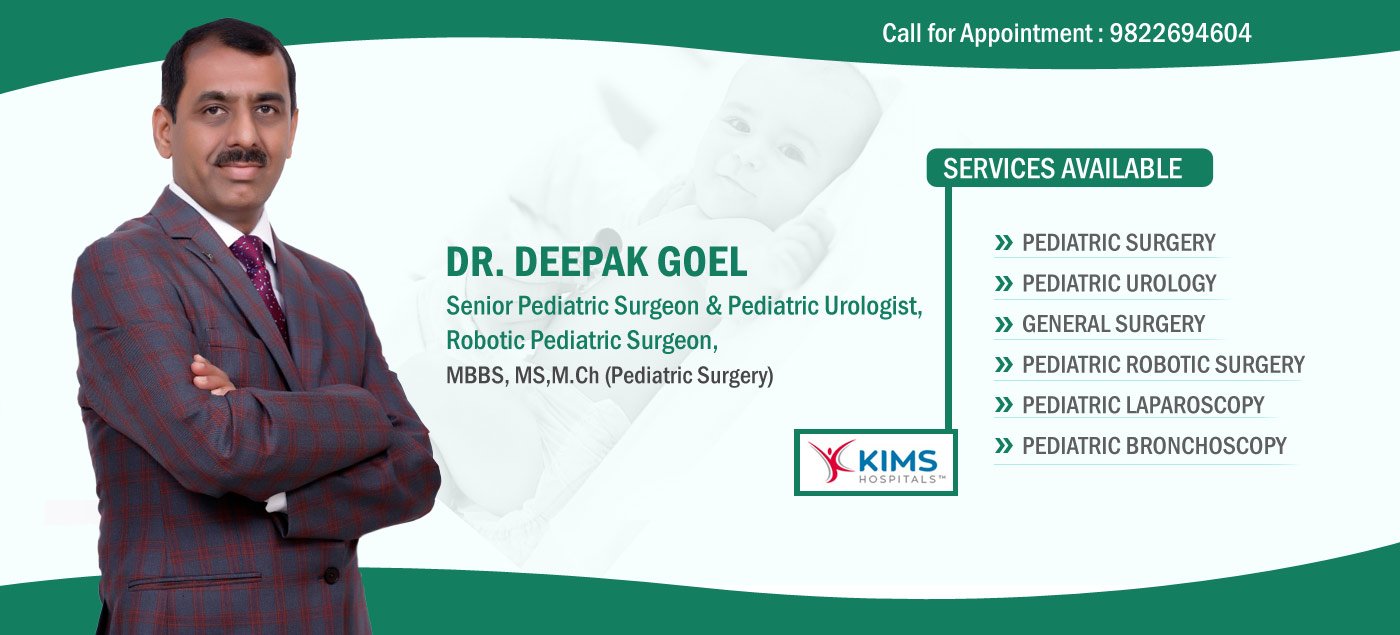
Understanding Hypospadias: Diagnosis and Surgical Treatment by Dr Deepak Goel
Understanding Hypospadias: Diagnosis and Surgical Treatment by Dr Deepak Goel : Hypospadias is one of the most common congenital conditions affecting boys, where the opening of the urethra is located on the underside of the penis rather than at its tip. This condition is present at birth and may vary from mild to severe. Early diagnosis and timely Hypospadias Surgery in Children can help restore normal urinary function, improve appearance, and support healthy development. With advances in Pediatric Surgery, Pediatric Urology, and Pediatric Robotic Surgery, hypospadias can be treated effectively with excellent long-term outcomes.
About Dr. Deepak Goel
Dr. Deepak Goel, MBBS, MS, M.Ch (Pediatric Surgery), is a highly experienced Senior Consultant Pediatric Surgeon & Pediatric Urologist, Robotic Pediatric Surgeon, and specialist in congenital urological disorders in children. Practicing in Nagpur, he has extensive expertise in Hypospadias Surgery in Children, Undescended Testes Surgery, Robotic Pyeloplasty in Children, Pediatric Kidney Stone Removal, neonatal surgery, and advanced minimally invasive procedures. His patient-centered approach ensures comprehensive care for children with complex urological conditions.
What Is Hypospadias?
Hypospadias is a congenital abnormality in which the urinary opening (meatus) is not located at the tip of the penis. Instead, it may be positioned anywhere along the underside of the penis, from just below the tip to the base of the penis or even near the scrotum.
In many cases, hypospadias is also associated with:
- Curvature of the penis (Chordee)
- Abnormal foreskin development
- Spraying or abnormal urinary stream
- Difficulty passing urine in a straight direction
Types of Hypospadias
The condition is classified according to the location of the urethral opening.
- Distal Hypospadias: Opening located near the tip of the penis.
- Midshaft Hypospadias: Opening located along the shaft of the penis.
- Proximal Hypospadias: Opening located near the base of the penis or scrotum.
The severity and treatment plan depend on the type and associated anatomical abnormalities.
Causes of Hypospadias
Hypospadias develops during fetal growth when the urethra and penis do not form completely before birth. Although the exact cause is not always known, several factors may contribute.
- Genetic influences
- Hormonal factors during pregnancy
- Family history of hypospadias
- Developmental variations during fetal growth
Signs and Symptoms of Hypospadias
Most cases are identified soon after birth during routine newborn examination.
- Urinary opening located below the tip of the penis
- Abnormal urine stream direction
- Curved penis during erection
- Incomplete foreskin formation
- Difficulty urinating while standing
- Cosmetic concerns affecting penile appearance
Why Early Treatment Is Important
Without treatment, hypospadias may lead to functional and psychological concerns later in life. Timely surgical correction can help:
- Improve urinary function
- Correct penile curvature
- Restore normal appearance
- Support normal sexual function in adulthood
- Prevent future complications
How Hypospadias Is Diagnosed
Diagnosis is usually made through physical examination by an experienced Pediatric Urologist. Additional investigations may be recommended in complex cases.
- Detailed clinical examination
- Assessment of penile curvature
- Evaluation of urinary function
- Ultrasound when required
- Assessment for associated congenital abnormalities
Procedure of Hypospadias Surgery in Children
Hypospadias Surgery in Children is performed to reposition the urethral opening, straighten the penis if necessary, and achieve normal function and appearance.
- Step 1: Detailed pediatric urology consultation and evaluation
- Step 2: Surgical planning based on severity and anatomy
- Step 3: Administration of general anesthesia
- Step 4: Reconstruction of the urethra
- Step 5: Correction of penile curvature (if present)
- Step 6: Repositioning of the urinary opening to the tip of the penis
- Step 7: Cosmetic reconstruction of penile tissues
- Step 8: Postoperative monitoring and recovery
- Step 9: Regular follow-up evaluations
Benefits of Modern Hypospadias Surgery
- Improved urinary stream
- Correction of penile curvature
- Enhanced cosmetic appearance
- Better long-term functional outcomes
- Improved confidence and quality of life
- Reduced risk of future complications
Postoperative Care After Hypospadias Surgery
Proper postoperative care is essential for successful healing and long-term results.
- Regular follow-up visits
- Proper wound care
- Medication as prescribed
- Adequate hydration
- Monitoring urinary function
- Avoiding activities that may affect healing
Why Choose Dr. Deepak Goel for Hypospadias Treatment?
- Experienced Pediatric Urologist and Pediatric Surgeon
- Expert in Hypospadias Surgery in Children
- Specialized care for congenital urological disorders
- Advanced minimally invasive and robotic surgical expertise
- Comprehensive preoperative and postoperative care
- Child-friendly treatment environment
- Focus on functional and cosmetic outcomes
Frequently Asked Questions (FAQs)
1. Is hypospadias a serious condition?
Hypospadias is a treatable congenital condition. Early diagnosis and appropriate surgical correction generally provide excellent outcomes.
2. At what age should hypospadias surgery be performed?
The timing of surgery depends on the child’s condition and overall health. A pediatric urologist can recommend the most appropriate timing after evaluation.
3. Can hypospadias affect urination?
Yes. Children may experience an abnormal urinary stream, spraying, or difficulty directing urine.
4. Is hypospadias surgery safe?
When performed by an experienced Pediatric Urologist, hypospadias surgery is considered safe and highly successful.
5. Will my child need multiple surgeries?
Many children are successfully treated with a single procedure, although complex cases may occasionally require additional corrective surgery.
6. Can hypospadias return after surgery?
Most children achieve long-term correction, but regular follow-up is important to monitor healing and development.
Hypospadias is a common and highly treatable congenital condition that can be effectively corrected with specialized pediatric urological care. Early diagnosis, expert surgical treatment, and proper follow-up can help ensure normal urinary function, healthy development, and excellent long-term outcomes. With extensive experience in Hypospadias Surgery in Children, Pediatric Urology, Pediatric Laparoscopic Surgery, and Pediatric Robotic Surgery, Dr. Deepak Goel provides advanced and compassionate care for children with hypospadias in Nagpur.