Umbilical Hernia Repair in Nagpur
Understanding Umbilical Hernia in Children
An umbilical hernia is a common condition seen in newborns and infants where a part of the intestine or fatty tissue protrudes through a weak spot in the abdominal muscles near the belly button. This often appears as a soft bulge at the navel, especially noticeable when the baby cries, coughs, or strains. Although small hernias may close naturally by the age of two, larger or persistent hernias usually require surgical correction by a Neonatal Surgeon or an experienced Pediatric Surgeon in Nagpur.
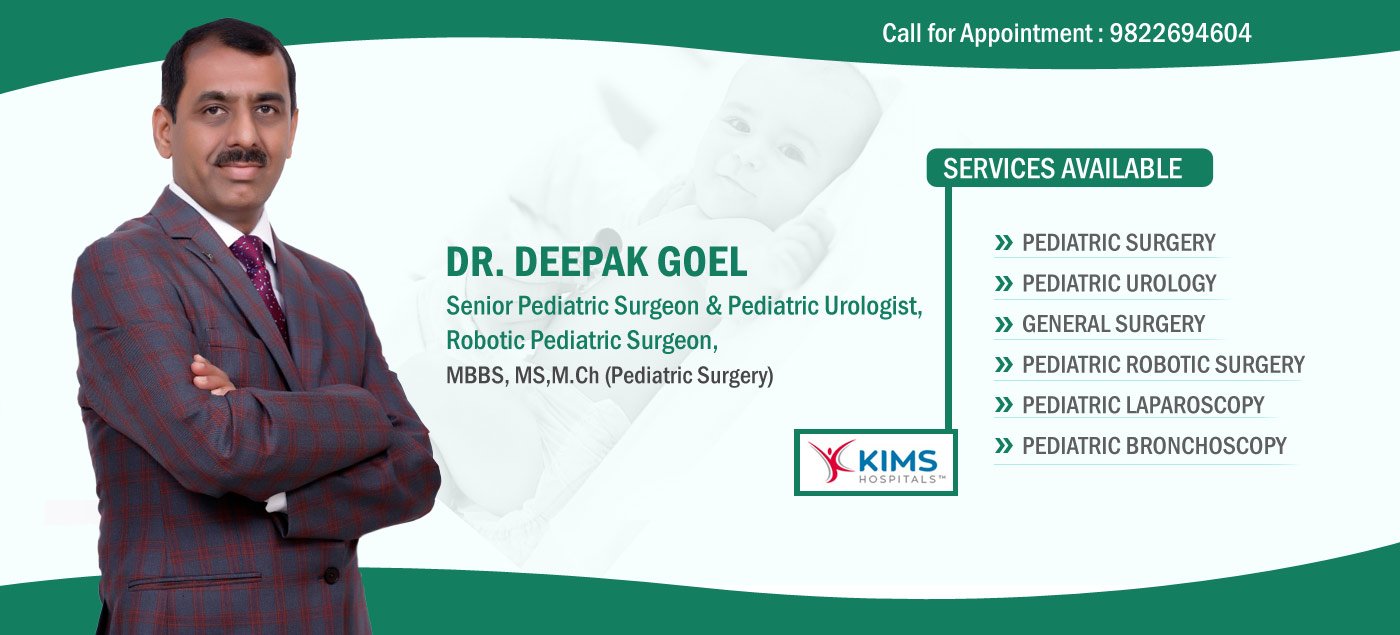
Meet Dr. Deepak Goel – Senior Consultant Pediatric Surgeon in Nagpur
Dr. Deepak Goel is a highly skilled and compassionate Senior Consultant Pediatric Surgeon & Pediatric Urologist in Nagpur. With qualifications including MBBS, MS, and M.Ch (Pediatric Surgery), he specializes in Pediatric Robotic Surgery and Pediatric Laparoscopic Surgery. Dr. Goel is renowned for his expertise in treating complex neonatal and pediatric conditions such as anorectal malformations, Hirschsprung’s disease, pediatric hernias, pediatric liver surgeries, and neonatal thoracoscopy procedures. His patient-centered approach, precision in minimally invasive techniques, and extensive experience make him one of the most trusted names for umbilical hernia repair in Nagpur.
Causes of Umbilical Hernia
An umbilical hernia develops when the abdominal wall doesn’t completely close after the umbilical cord is cut. This condition is more common among:
- Premature or low-birth-weight infants
- Babies with genetic or connective tissue disorders
- Infants with increased abdominal pressure due to coughing, constipation, or ascites
In most cases, it is congenital and not caused by any parental action. Early consultation with a Pediatric Laparoscopic Surgeon or Neonatal Laparoscopic Surgeon ensures timely diagnosis and monitoring.
Symptoms of Umbilical Hernia in Infants
Parents may observe a soft bulge around the navel that becomes more prominent when the baby cries. Common symptoms include:
- A visible swelling or lump at the belly button
- The bulge becomes firmer when the baby strains
- Occasional discomfort or pain if the hernia becomes trapped
- In rare cases, vomiting or redness around the umbilical area (indicating strangulation)
If these symptoms occur, immediate medical evaluation by a Child Specialist Surgeon or Pediatric Urologist is essential.
Diagnosis and Evaluation
The diagnosis of an umbilical hernia is primarily clinical, based on physical examination. In certain complex cases, ultrasound or imaging studies may be recommended by a Pediatric Robotic Surgeon or Pediatric Thoracoscopic Surgeon to evaluate internal structures and rule out other abdominal conditions such as gastroschisis, pyloric stenosis, or anorectal malformations.
Procedure for Umbilical Hernia Repair
When the hernia does not close naturally by age 2–4, or if complications arise, a surgical procedure known as Umbilical Hernia Repair is performed. The surgery is safe and typically completed within 30–45 minutes by a skilled Pediatric Surgeon or Neonatal Laparoscopic Surgeon.
- The child is given general anesthesia for comfort.
- A small incision is made at the base of the belly button.
- The herniated tissue is gently pushed back into the abdomen.
- The abdominal wall defect is closed with dissolvable sutures.
- The umbilical skin is reshaped to restore a natural appearance.
Advanced centers in Nagpur also offer Pediatric Laparoscopic Surgery or Robotic Umbilical Hernia Repair, which allows for faster recovery, minimal scarring, and less postoperative pain.
Postoperative Care and Recovery
After surgery, most children recover quickly and can return home the same day. Postoperative care includes:
- Keeping the incision clean and dry
- Monitoring for redness or swelling
- Avoiding pressure on the abdomen for a few weeks
- Regular follow-ups with the Pediatric Surgeon
In expert hands, complications are extremely rare. Modern approaches such as pediatric robotic surgery and laparoscopic repair ensure precision and safety, even in neonates or infants with other congenital conditions like Hirschsprung’s disease or neonatal omphalocele.
Why Choose a Specialized Pediatric Surgeon in Nagpur?
Choosing the right surgeon plays a vital role in achieving the best outcome. A Senior Consultant Pediatric Surgeon not only treats umbilical hernia but also performs a wide range of complex surgeries including:
- Hypospadias surgery in children
- Undescended testes surgery
- Hydrocele treatment
- Robotic pyeloplasty and pediatric kidney stone removal
- Wilms tumor and Neuroblastoma surgery
- Teratoma removal and pediatric fundoplication for GERD
Expertise in both laparoscopic and robotic pediatric surgery ensures advanced care with minimal discomfort for the child.
Frequently Asked Questions (FAQs)
1. What is the best age for umbilical hernia repair in children?
Most umbilical hernias close naturally by age 2, but if they persist beyond age 4 or show signs of complication, surgical repair is recommended by a Pediatric Surgeon.
2. Is umbilical hernia surgery safe for infants?
Yes, the procedure is highly safe when performed by an experienced Neonatal Surgeon or Pediatric Laparoscopic Surgeon using modern techniques.
3. How long does recovery take after surgery?
Children usually recover within a week, with full activity resumed in 2–3 weeks under the guidance of the Pediatric Surgeon.
4. Will the hernia recur after surgery?
Recurrence is extremely rare when the repair is done by a skilled Pediatric Robotic Surgeon following proper closure and post-surgical care.
5. Can umbilical hernia be treated without surgery?
Small hernias may close on their own in infants, but larger or symptomatic ones require surgical correction to prevent complications.
Umbilical Hernia Repair in Nagpur is a safe and effective procedure when handled by an expert Pediatric Surgeon like Dr. Deepak Goel. With advanced laparoscopic and robotic pediatric surgery options, parents can rest assured that their child receives world-class surgical care, quick recovery, and lasting results in a compassionate environment.