Understanding Pediatric Surgery: What Parents Need to Know
Understanding Pediatric Surgery: What Parents Need to Know : Hearing that your child may need surgery can be overwhelming for any parent. It is natural to feel anxious, have numerous questions, and worry about your child’s safety and recovery. However, modern pediatric surgery has advanced tremendously over the years, offering highly specialized, safe, and effective treatment for a wide range of congenital and acquired conditions affecting newborns, infants, children, and adolescents. Pediatric surgeons are specially trained to understand the unique anatomy, physiology, and emotional needs of children, ensuring that every procedure is performed with precision, compassion, and the highest standards of safety. Early diagnosis and timely surgical intervention often lead to excellent outcomes and allow children to live healthy, active lives.
Unlike adult surgery, pediatric surgery focuses entirely on treating conditions that occur during infancy and childhood. Children’s organs are still growing and developing, making surgical planning significantly different from that of adults. Every aspect of treatment—from anesthesia and pain management to surgical techniques and postoperative care—is carefully tailored to meet the child’s age, weight, developmental stage, and overall health. Whether it involves correcting a congenital abnormality, treating a pediatric urological disorder, repairing a hernia, or managing a childhood tumor, specialized pediatric surgical care provides the best opportunity for successful treatment and long-term well-being.
Parents should never delay seeking medical attention if their child has persistent abdominal pain, swelling, urinary problems, feeding difficulties, congenital abnormalities, recurrent infections, or symptoms identified during prenatal ultrasound examinations. Consulting an experienced Best Pediatric Surgeon, Child Specialist Surgeon, or Neonatal Urologist ensures that children receive specialized evaluation and timely treatment before complications develop.
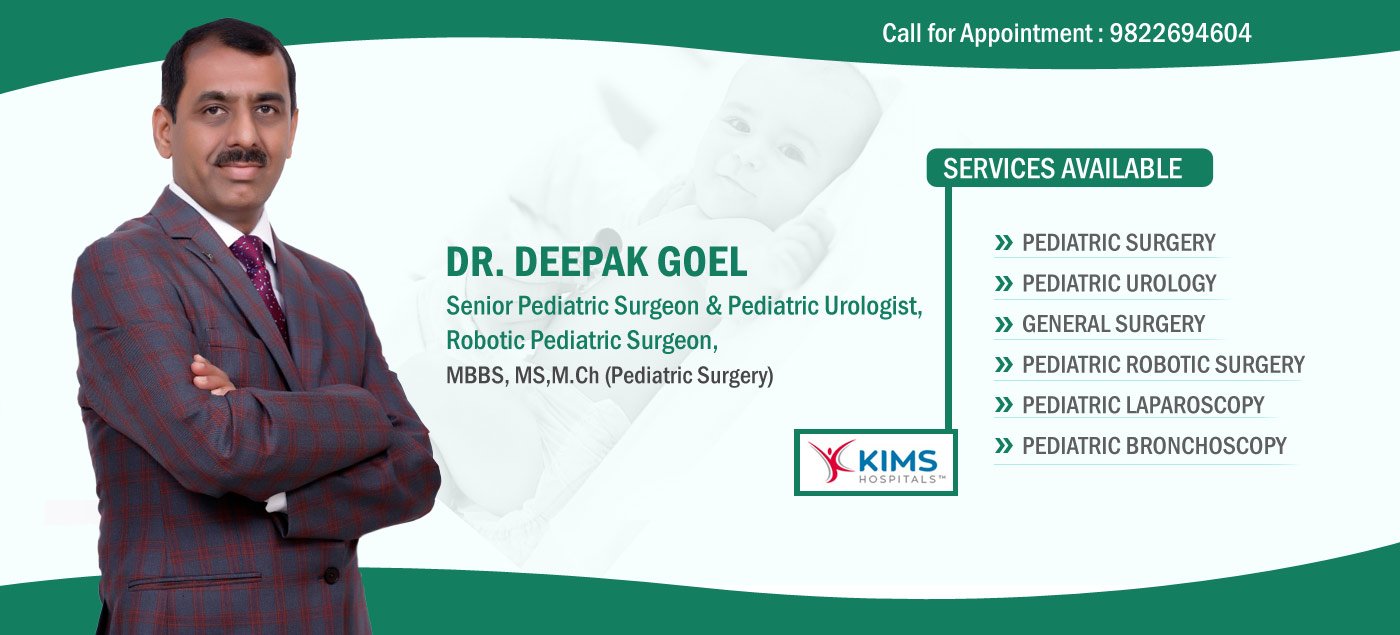
About Dr. Deepak Goel – Senior Consultant Pediatric Surgeon & Pediatric Urologist
Dr. Deepak Goel, MBBS, MS, M.Ch (Pediatric Surgery), is a highly respected Senior Consultant Pediatric Surgeon & Pediatric Urologist and an experienced Robotic Pediatric Surgeon dedicated exclusively to the surgical care of newborns, infants, children, and adolescents. With extensive expertise in neonatal surgery, pediatric urology, laparoscopic surgery, robotic surgery, and minimally invasive procedures, he offers comprehensive treatment for congenital anomalies, pediatric gastrointestinal disorders, urinary tract diseases, childhood tumors, thoracic conditions, and neonatal surgical emergencies using evidence-based surgical techniques.
As a renowned Pediatric General Surgeon, Pediatric Robotic Surgeon, and expert in Pediatric Minimally Invasive Surgery, Dr. Goel specializes in treating Hypospadias Treatment, Congenital Epispadias Surgery, Hydrocele Treatment in Children, Inguinal Hernia Surgery in Children, Pediatric Bladder Stone Treatment, Robotic Pyeloplasty in Children, neonatal urological disorders, congenital birth defects, and numerous complex pediatric surgical conditions, providing compassionate, child-centered care with outstanding clinical outcomes.
What is Pediatric Surgery?
Pediatric surgery is a super-specialty branch of surgery dedicated to diagnosing, treating, and managing surgical diseases affecting children from birth until adolescence. Pediatric surgeons receive additional specialized training after completing general surgery, enabling them to manage complex childhood diseases that require a thorough understanding of developing organs, congenital abnormalities, pediatric physiology, and child-specific surgical techniques.
Pediatric surgeons work closely with pediatricians, neonatologists, anesthesiologists, radiologists, pediatric intensivists, oncologists, and rehabilitation specialists to provide comprehensive care before, during, and after surgery. This multidisciplinary approach ensures safer procedures, faster recovery, and improved long-term outcomes for children.
Conditions Commonly Treated by Pediatric Surgeons
Pediatric surgeons manage a wide range of congenital, developmental, traumatic, infectious, gastrointestinal, urological, thoracic, and oncological conditions that are unique to childhood. Many of these disorders require specialized surgical expertise that differs significantly from adult surgery.
- Hypospadias Treatment
- Congenital Epispadias Surgery
- Undescended Testes (Cryptorchidism)
- Hydrocele Treatment in Children
- Inguinal Hernia Surgery in Children
- Laparoscopic Pediatric Hernia Surgery
- Hirschsprung’s Disease Surgery
- Anorectal Malformations Surgery
- Pyloric Stenosis Surgery
- Esophageal Atresia Repair
- Gastroschisis Surgery
- Neonatal Omphalocele Repair
- Pediatric Appendix Treatment (Appendicitis Surgery)
- Pediatric Fundoplication for GERD
- Teratoma Removal in Children
- Wilms Tumor and Pediatric Kidney Tumor Surgery
- Liver Tumor Surgery in Children
- Neuroblastoma Surgery in Children
- Neonatal Thoracic Surgery
When Does a Child Need Pediatric Surgery?
Not every childhood illness requires surgery. However, certain congenital abnormalities, emergency conditions, infections, injuries, tumors, or urinary tract disorders cannot be effectively treated with medications alone. Early surgical evaluation allows doctors to determine the most appropriate treatment while minimizing complications and preserving normal growth and development.
- Congenital abnormalities detected before or after birth.
- Persistent abdominal pain requiring surgical evaluation.
- Swelling in the groin, abdomen, or scrotum.
- Difficulty passing urine or abnormal urinary stream.
- Repeated urinary tract infections.
- Persistent vomiting or feeding difficulties in newborns.
- Intestinal obstruction or severe constipation.
- Childhood tumors requiring surgical removal.
- Traumatic injuries requiring emergency surgery.
- Conditions identified during prenatal ultrasound examinations.
How Pediatric Surgery Differs from Adult Surgery
Children have rapidly growing organs, smaller body structures, unique physiological responses, and different emotional needs compared to adults. Pediatric surgeons are specially trained to address these differences through child-specific surgical planning, pediatric anesthesia, specialized equipment, and multidisciplinary postoperative care. Their goal is not only to treat the disease but also to preserve normal growth, organ function, fertility where applicable, and the child’s future quality of life.
- Specialized pediatric surgical training beyond general surgery.
- Child-sized surgical instruments and advanced technology.
- Dedicated pediatric anesthesia protocols.
- Focus on preserving growth and organ development.
- Family-centered counseling and postoperative care.
- Expert management of congenital birth defects and neonatal surgical emergencies.
- Age-appropriate pain management and rehabilitation.
Modern Pediatric Surgical Techniques and Treatment Approaches
Advancements in pediatric surgery have transformed the way childhood surgical conditions are treated. Today, many procedures that once required large incisions and prolonged hospitalization can now be performed using laparoscopic, robotic, and minimally invasive surgical techniques. These advanced approaches provide greater precision, reduced postoperative pain, minimal blood loss, faster recovery, shorter hospital stays, and improved cosmetic outcomes. Every treatment plan is carefully tailored according to the child’s age, diagnosis, growth, and overall health to achieve the best possible long-term results.
Children undergoing surgery performed by an experienced Pediatric Robotic Surgeon and specialist in Pediatric Minimally Invasive Surgery benefit from advanced technology that enables surgeons to perform delicate reconstructive procedures with exceptional accuracy while minimizing trauma to healthy tissues.
- Smaller incisions and better cosmetic results.
- Reduced postoperative pain and discomfort.
- Minimal blood loss during surgery.
- Lower risk of infection and wound complications.
- Shorter hospital stay.
- Faster recovery and early return to normal activities.
- Improved surgical precision for complex pediatric procedures.
- Excellent long-term functional outcomes.
Preparing Your Child for Surgery
Proper preparation before surgery helps reduce anxiety for both children and parents. Pediatric surgical teams ensure that families understand the diagnosis, treatment plan, anesthesia process, expected recovery, and postoperative care. Parents are encouraged to ask questions and actively participate in the child’s care throughout the treatment journey.
- Attend all pre-operative consultations.
- Follow fasting instructions before surgery.
- Inform the surgeon about medications, allergies, and previous illnesses.
- Carry all medical records and investigation reports.
- Provide emotional reassurance to the child before surgery.
- Follow all postoperative care instructions carefully.
Recovery After Pediatric Surgery
Recovery varies depending on the child’s age, the type of surgery performed, and the underlying medical condition. Most children recover remarkably well because of their excellent healing capacity. Minimally invasive procedures generally result in less discomfort, quicker mobilization, and earlier discharge compared to traditional open surgery.
- Most children resume feeding soon after surgery, depending on the procedure.
- Pain is managed using child-specific medications.
- Parents receive detailed wound care instructions.
- Regular follow-up appointments monitor healing and development.
- Children are gradually allowed to return to school and normal physical activities.
- Long-term follow-up ensures healthy growth and organ function.
Comprehensive Pediatric Surgical Services Offered by Dr. Deepak Goel
Dr. Deepak Goel provides comprehensive surgical care for newborns, infants, children, and adolescents with congenital, gastrointestinal, thoracic, urological, oncological, and emergency surgical conditions. His expertise in advanced minimally invasive and robotic surgery allows children to receive world-class treatment with excellent safety and long-term outcomes.
- Best Neonatal Surgeon for congenital surgical disorders and neonatal emergencies.
- Neonatal Laparoscopic Surgeon for minimally invasive neonatal surgery.
- Neonatal Urologist for congenital kidney, bladder, and urinary tract disorders.
- Hypospadias Treatment.
- Congenital Epispadias Surgery.
- Undescended Testes (Orchiopexy).
- Hydrocele Treatment in Children.
- Inguinal Hernia Surgery in Children.
- Laparoscopic Pediatric Hernia Surgery.
- Pediatric Bladder Stone Treatment.
- Robotic Pyeloplasty in Children.
- Hirschsprung’s Disease Surgery.
- Neonatal Hirschsprung’s Disease Surgery.
- Anorectal Malformations Surgery.
- Pyloric Stenosis Surgery.
- Esophageal Atresia Repair.
- Gastroschisis Surgery.
- Neonatal Omphalocele Repair.
- Neonatal Thoracic Surgery.
- Best Pediatric Renal Tumor Surgeon for Wilms Tumor Surgery and other pediatric kidney tumors.
- Liver Tumor Surgery in Children.
- Neuroblastoma Surgery in Children.
- Teratoma Removal in Children.
- Pediatric Fundoplication for GERD.
- Pediatric Appendix Treatment and Appendectomy.
Frequently Asked Questions (FAQs)
1. Is pediatric surgery safe for newborns and children?
Yes. Modern pediatric surgery is highly safe when performed by trained pediatric surgeons using specialized pediatric anesthesia, advanced surgical techniques, and dedicated postoperative care.
2. Why should my child be treated by a pediatric surgeon instead of a general surgeon?
Pediatric surgeons receive additional super-specialty training focused exclusively on childhood surgical diseases, congenital abnormalities, neonatal surgery, and child-specific surgical techniques.
3. Are minimally invasive surgeries available for children?
Yes. Many pediatric conditions can now be treated using laparoscopic and robotic surgery, which offer less pain, faster recovery, and smaller scars.
4. How long does recovery usually take after pediatric surgery?
Recovery depends on the procedure performed, but most children recover quickly and return to normal activities sooner than adults due to their excellent healing ability.
5. Can congenital abnormalities be corrected successfully?
Yes. Many congenital disorders can be successfully corrected with timely surgery, allowing children to lead healthy and active lives.
6. Will my child experience severe pain after surgery?
Pain is usually well controlled with child-specific pain management protocols, and minimally invasive procedures further reduce postoperative discomfort.
7. When should parents seek consultation with a pediatric surgeon?
Parents should consult a pediatric surgeon if a child has congenital abnormalities, persistent abdominal pain, recurrent urinary infections, swelling, vomiting, feeding difficulties, or any condition requiring surgical evaluation.
8. Can prenatal ultrasound detect surgical problems before birth?
Yes. Many congenital abnormalities affecting the gastrointestinal, urinary, and thoracic systems are identified during prenatal ultrasound, allowing appropriate planning for treatment after birth.
9. Do all childhood surgical conditions require open surgery?
No. Many conditions are successfully treated using laparoscopic or robotic techniques, depending on the child’s diagnosis and overall health.
10. What is the advantage of early surgical treatment?
Early intervention prevents complications, preserves organ function, supports healthy growth, reduces hospital stays, and significantly improves long-term outcomes.
Conclusion
Understanding pediatric surgery empowers parents to make informed decisions about their child’s health. With early diagnosis, specialized surgical expertise, and access to advanced laparoscopic, robotic, and minimally invasive techniques, most pediatric surgical conditions can be treated safely and effectively. Choosing an experienced pediatric surgeon ensures that every aspect of care—from diagnosis and surgery to recovery and long-term follow-up—is designed specifically for the unique needs of growing children, helping them achieve the best possible health and quality of life.
Consultation & Appointment
KIMS CUDDLES
SPANV Medisearch Lifesciences Pvt. Ltd.,
44, Kingsway Rd, Near Kasturchand Park,
Mohan Nagar, Nagpur, Maharashtra – 440001
Appointment: +91 9822694604