Top Signs Your Child May Need Pediatric Surgical Consultation: A Guide by Dr Deepak Goel
Top Signs Your Child May Need Pediatric Surgical Consultation : A Guide by Dr Deepak Goel : Parents often face uncertainty when their child develops a medical condition that may require surgical treatment. While many childhood illnesses can be managed with medications, certain congenital abnormalities, abdominal disorders, urological conditions, and growth-related problems require evaluation by a Pediatric Surgeon. Recognizing the warning signs early can help prevent complications and ensure timely treatment. This guide by Dr. Deepak Goel highlights the most common signs that indicate your child may benefit from a pediatric surgical consultation.
About Dr. Deepak Goel
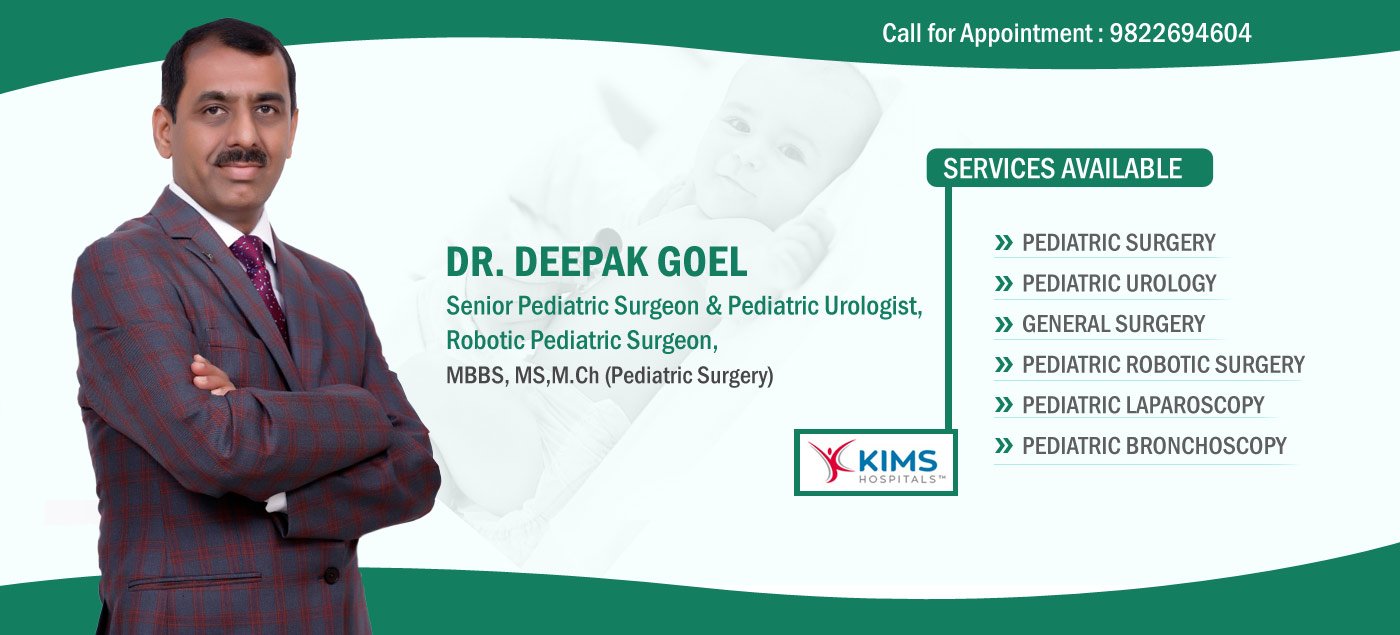
Dr. Deepak Goel, MBBS, MS, M.Ch (Pediatric Surgery), is a highly respected Senior Consultant Pediatric Surgeon & Pediatric Urologist, Robotic Pediatric Surgeon, and expert in advanced child surgical care in Nagpur. He specializes in Pediatric Surgery, Pediatric Laparoscopic Surgery, Pediatric Robotic Surgery, neonatal surgery, pediatric urology, and minimally invasive procedures. His expertise extends to the treatment of congenital anomalies, pediatric tumors, urological disorders, and complex neonatal surgical conditions.
Why Early Pediatric Surgical Evaluation Matters
Many pediatric surgical conditions are easier to treat when diagnosed early. Delayed treatment may increase the risk of complications, prolonged discomfort, and more complex surgical procedures. Consulting a Best Pediatric Surgeon at the right time can significantly improve outcomes and support your child’s healthy growth and development.
1. Persistent Swelling in the Groin or Abdomen
A noticeable swelling in the groin, scrotum, or abdominal region may indicate conditions such as a hernia or hydrocele. These conditions often require evaluation by a Child Specialist Surgeon.
- Pediatric Hernias Treatment
- Hydrocele Treatment in Children
- Inguinal hernia repair
2. Undescended Testes in Boys
If one or both testicles have not moved into the scrotum by the expected age, surgical correction may be necessary. Early treatment can help reduce future fertility and developmental complications.
- Undescended Testes Surgery
- Pediatric Urologist evaluation
3. Abnormal Urination or Urinary Problems
Difficulty passing urine, recurrent urinary tract infections, urinary obstruction, or abnormal urine flow may indicate underlying pediatric urological disorders requiring specialized treatment.
- Hypospadias Surgery in Children
- Robotic Pyeloplasty in Children
- Pediatric Kidney Stone Removal
- Pediatric Urologist consultation
4. Severe or Recurrent Abdominal Pain
Persistent abdominal pain should never be ignored, especially if accompanied by fever, vomiting, loss of appetite, or abdominal swelling.
- Pediatric Appendix Treatment
- Pediatric Liver Surgeries
- Pediatric abdominal surgical evaluation
5. Persistent Vomiting in Infants
Forceful or repeated vomiting in newborns and infants may indicate conditions such as Pyloric Stenosis, which often requires prompt surgical treatment.
- Pyloric Stenosis Surgery
- Neonatal Laparoscopic Surgeon evaluation
6. Difficulty Passing Stool Since Birth
Children who experience chronic constipation, abdominal distension, or difficulty passing stool from birth may have congenital intestinal conditions requiring surgery.
- Hirschsprung’s Disease Surgery
- Neonatal Hirschsprung’s Disease Surgery
- Anorectal Malformations Surgery
7. Congenital Abnormalities Detected at Birth
Some babies are born with structural abnormalities that require immediate evaluation by a Neonatal Surgeon. Early diagnosis and intervention often improve outcomes.
- Gastroschisis Surgery
- Neonatal Omphalocele Repair
- Anorectal Malformations Surgery
- Neonatal Thoracoscopic Surgeon procedures
8. Persistent Acid Reflux and Feeding Difficulties
Children with severe gastroesophageal reflux disease (GERD) who do not improve with medical treatment may benefit from surgical intervention.
- Pediatric Fundoplication for GERD
- Advanced Pediatric Laparoscopic Surgeon procedures
9. Unexplained Lumps, Masses, or Tumors
Any unusual lump or swelling in a child should be evaluated promptly to determine its cause and appropriate treatment.
- Teratoma Removal in Children
- Wilms Tumor Surgery
- Neuroblastoma Surgery in Children
10. Chest Conditions Requiring Specialized Surgical Care
Some respiratory and thoracic abnormalities require assessment by a Pediatric Thoracoscopic Surgeon for minimally invasive treatment.
- Pediatric Thoracoscopic Surgeon procedures
- Neonatal Thoracoscopic Surgeon procedures
- Thoracic congenital anomaly treatment
Modern Surgical Options Available for Children
Advances in technology have made pediatric surgery safer and more effective than ever before.
- Pediatric Laparoscopic Surgery
- Pediatric Robotic Surgery
- Minimally invasive neonatal procedures
- Advanced pediatric urological surgery
- Thoracoscopic surgery for children
What Happens During a Pediatric Surgical Consultation?
- Detailed medical history review
- Comprehensive physical examination
- Diagnostic imaging and laboratory tests
- Discussion of treatment options
- Surgical planning when necessary
- Parental counseling and guidance
Frequently Asked Questions (FAQs)
1. When should I consult a pediatric surgeon instead of a pediatrician?
If your child has a condition that may require surgical correction, congenital abnormalities, hernias, urinary problems, or persistent abdominal symptoms, a pediatric surgical consultation is recommended.
2. Are pediatric surgeries safe?
Yes. Modern pediatric surgical techniques, including Pediatric Laparoscopic Surgery and Pediatric Robotic Surgery, are designed to maximize safety and minimize recovery time.
3. Can congenital abnormalities be corrected successfully?
Many congenital conditions can be effectively treated through timely surgical intervention, especially when diagnosed early.
4. What are the benefits of robotic surgery in children?
Pediatric Robotic Surgery offers greater precision, smaller incisions, reduced pain, and faster recovery.
5. Does every hernia in a child require surgery?
Most pediatric hernias require surgical repair to prevent future complications and ensure normal development.
6. How long does recovery take after pediatric surgery?
Recovery depends on the type of procedure and the child’s overall health, but minimally invasive surgeries generally allow quicker recovery.
Recognizing the early signs of pediatric surgical conditions can make a significant difference in your child’s health and well-being. Whether your child has a congenital anomaly, hernia, urinary disorder, abdominal condition, or requires advanced minimally invasive treatment, timely consultation with an experienced Pediatric Surgeon is essential. With extensive expertise in Pediatric Surgery, Pediatric Urology, Neonatal Surgery, Pediatric Laparoscopic Surgery, and Pediatric Robotic Surgery, Dr. Deepak Goel provides comprehensive and compassionate surgical care for children in Nagpur.