Undescended Testicles in Children: Early Treatment Matters
Undescended Testicles in Children: Early Treatment Matters : Undescended testicles, medically known as Cryptorchidism, is one of the most common congenital conditions affecting newborn boys. In this condition, one or both testicles fail to move into the scrotum before birth. Although the condition may appear harmless during infancy, delaying treatment can significantly increase the risk of infertility, hormonal imbalance, testicular torsion, inguinal hernia, trauma, and even testicular cancer later in life.
The testicles normally develop inside the baby’s abdomen during pregnancy and gradually descend into the scrotum during the final months before birth. If this natural process is interrupted, the testicle may remain inside the abdomen, within the inguinal canal, or at another abnormal location. While some undescended testicles descend naturally within the first few months of life, many require timely surgical correction to ensure healthy growth and future reproductive function.
Parents should never ignore an empty scrotum or assume that the condition will always correct itself. Early evaluation by a qualified Best Pediatric Surgeon, experienced Child Specialist Surgeon, or skilled Neonatal Urologist is essential for accurate diagnosis and appropriate treatment planning.
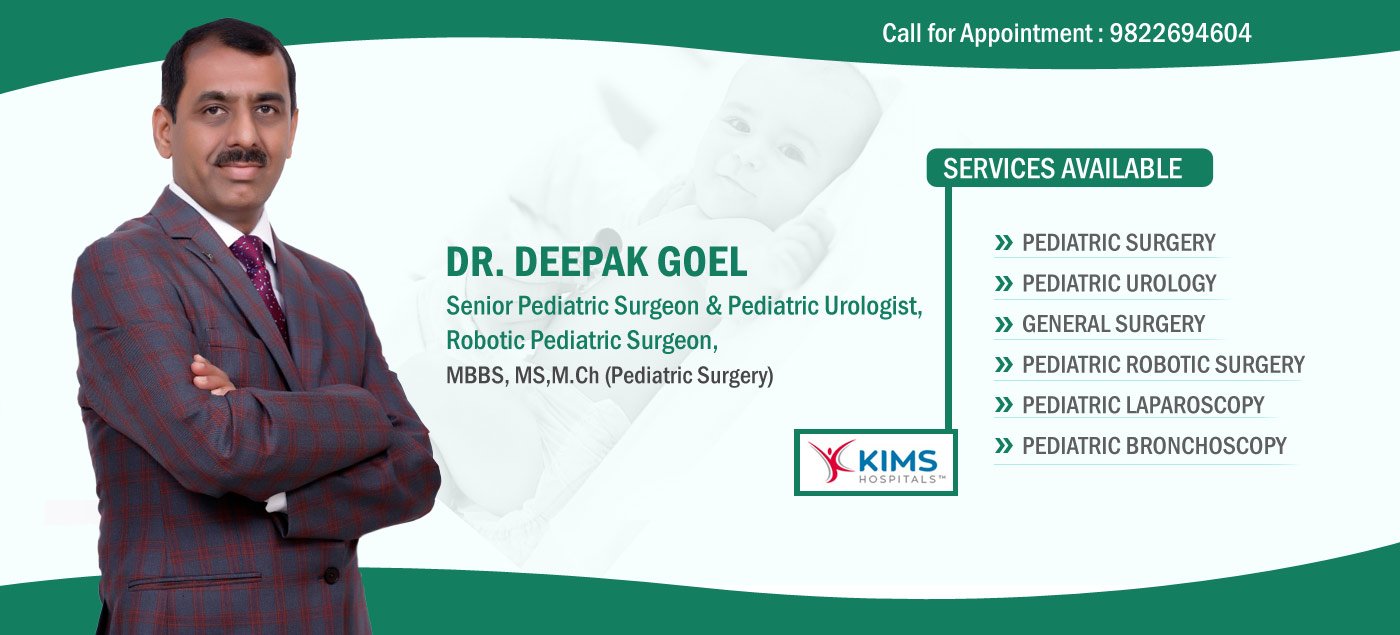
About Dr. Deepak Goel – Senior Consultant Pediatric Surgeon & Pediatric Urologist in Nagpur
Dr. Deepak Goel is a highly experienced Senior Consultant Pediatric Surgeon & Pediatric Urologist, Robotic Pediatric Surgeon, holding qualifications of MBBS, MS, M.Ch (Pediatric Surgery). He specializes in the diagnosis and treatment of newborn, infant, and childhood surgical conditions using advanced laparoscopic, robotic, and minimally invasive techniques. As a renowned Pediatric General Surgeon, Pediatric Robotic Surgeon, and expert in Pediatric Minimally Invasive Surgery, he offers comprehensive care for conditions including undescended testicles, Hypospadias Treatment, Hydrocele Treatment in Children, Inguinal Hernia Surgery in Children, Robotic Pyeloplasty in Children, neonatal urological disorders, congenital anomalies, pediatric tumors, and complex newborn surgeries. His patient-centered approach, modern technology, and commitment to child safety have made him one of the most trusted pediatric surgeons in Central India.
Consultation Address:
KIMS CUDDLES
SPANV Medisearch Lifesciences Pvt. Ltd.,
44, Kingsway Road, Near Kasturchand Park,
Mohan Nagar, Nagpur – 440001
Appointment: +91 9822694604
What are Undescended Testicles?
An undescended testicle occurs when one or both testes fail to reach their normal position inside the scrotum before birth. This condition affects nearly 3–5% of full-term newborn boys and up to 30% of premature infants. In many babies the testicle descends naturally within six months, but persistence beyond this age usually requires surgical treatment.
The testicle may remain:
- Inside the abdomen
- Within the inguinal canal
- Near the groin
- At an ectopic location outside the normal path
Modern pediatric surgical techniques allow safe correction through minimally invasive procedures, especially when performed by an experienced Neonatal Laparoscopic Surgeon.
Why Early Treatment is Extremely Important
Many parents believe surgery can wait until school age, but international pediatric guidelines strongly recommend treatment between 6 and 18 months of age. Earlier correction improves fertility potential, protects hormonal function, and lowers future complications.
- Improves future fertility potential
- Reduces risk of testicular cancer
- Prevents twisting (torsion) of the testicle
- Reduces chances of associated inguinal hernia
- Supports normal hormone production
- Allows easier examination during adulthood
- Promotes healthy psychological development
- Preserves normal testicular growth
Causes of Undescended Testicles
The exact reason is often multifactorial. Several genetic, hormonal, developmental, and environmental factors influence testicular descent during pregnancy.
- Premature birth
- Low birth weight
- Hormonal abnormalities
- Genetic syndromes
- Family history
- Abnormal development of the spermatic cord
- Maternal diabetes
- Maternal smoking during pregnancy
- Exposure to endocrine-disrupting chemicals
- Congenital developmental disorders
Babies with multiple congenital anomalies may also require evaluation by specialists experienced in Congenital Epispadias Surgery, Hypospadias Treatment, and other pediatric urological conditions.
Signs and Symptoms Parents Should Notice
Most children experience no pain, making parental observation and newborn examination extremely important.
- One side of the scrotum appears empty
- Both sides of the scrotum appear underdeveloped
- Testicle cannot be felt during bathing
- Unequal scrotal appearance
- Associated groin swelling
- Occasional discomfort during physical activity in older children
- Associated congenital urinary abnormalities
Children presenting with urinary abnormalities may require additional evaluation by a specialized Neonatal Urologist to rule out associated congenital defects.
Conditions Commonly Associated with Undescended Testicles
Cryptorchidism is sometimes associated with several congenital pediatric surgical conditions requiring multidisciplinary management.
- Hypospadias Treatment
- Hydrocele Treatment in Children
- Inguinal Hernia Surgery in Children
- Laparoscopic Pediatric Hernia Surgery
- Congenital Epispadias Surgery
- Pediatric urinary tract abnormalities
- Disorders of sexual development
How is the Diagnosis Made?
Diagnosis primarily involves a detailed physical examination performed by an experienced pediatric surgeon. The specialist determines whether the testicle is palpable, retractile, ectopic, or completely intra-abdominal. Additional investigations are recommended only in selected cases.
Diagnostic evaluation may include:
- Detailed physical examination
- Birth and family history
- Ultrasound in selected patients
- MRI in rare situations
- Diagnostic laparoscopy for non-palpable testicles
- Hormonal evaluation when indicated
- Genetic testing in complex congenital disorders
Diagnostic laparoscopy performed by an experienced Neonatal Laparoscopic Surgeon provides excellent visualization while minimizing surgical trauma.
Treatment of Undescended Testicles
Treatment depends on the age of the child, location of the testicle, associated abnormalities, and overall health. Hormonal therapy has very limited success and is generally not considered the standard treatment. Surgical correction, known as Orchiopexy, remains the gold standard worldwide.
The procedure involves carefully mobilizing the undescended testicle while preserving its blood supply and relocating it into the scrotum, where it is securely fixed to prevent future displacement. Modern laparoscopic and minimally invasive techniques allow quicker recovery, minimal pain, smaller scars, and excellent long-term outcomes.
Children requiring advanced minimally invasive correction benefit from expertise in Pediatric Minimally Invasive Surgery and robotic pediatric surgical techniques.
Step-by-Step Procedure of Orchiopexy (Undescended Testicle Surgery)
Orchiopexy is the standard surgical procedure performed to move an undescended testicle into the scrotum and permanently fix it in its normal position. It is one of the most successful pediatric urological procedures when performed by an experienced Best Pediatric Surgeon and Pediatric Robotic Surgeon. The surgery is generally recommended between 6 and 18 months of age to preserve fertility potential and reduce future health risks.
- Pre-operative Evaluation: The child undergoes a complete physical examination, medical history review, and necessary investigations. Imaging studies may be advised for non-palpable testes.
- Administration of Anesthesia: The child receives safe pediatric general anesthesia administered by an experienced pediatric anesthesiology team.
- Surgical Exploration: Depending on the location of the testicle, a small groin incision or laparoscopic approach is used to identify the undescended testis.
- Mobilization of the Testicle: The surgeon carefully frees the testicle while preserving the blood vessels and vas deferens to maintain normal blood supply and reproductive function.
- Creation of Scrotal Pouch: A small pocket is prepared inside the scrotum to accommodate the testicle.
- Fixation (Orchiopexy): The testicle is gently brought down into the scrotum and securely fixed to prevent it from moving back upward.
- Closure: The incision is closed with absorbable sutures, resulting in minimal scarring.
- Recovery: Most children recover quickly and are discharged either on the same day or within 24 hours, depending on the complexity of the surgery.
Children with non-palpable abdominal testes often benefit from advanced laparoscopic procedures performed by an experienced Neonatal Laparoscopic Surgeon, ensuring excellent visualization with minimal tissue trauma.
Laparoscopic and Minimally Invasive Treatment
Modern pediatric surgery has significantly evolved with the introduction of laparoscopic and robotic surgical techniques. These minimally invasive procedures offer several advantages over traditional open surgery, particularly for abdominal undescended testes. Specialized expertise in Pediatric Minimally Invasive Surgery allows surgeons to perform highly precise operations with excellent cosmetic and functional outcomes.
- Smaller incisions with minimal scarring
- Reduced postoperative pain
- Less blood loss during surgery
- Lower risk of wound infection
- Faster recovery and early discharge
- Earlier return to normal activities
- Excellent visualization of abdominal structures
- Better long-term cosmetic outcomes
For selected complex pediatric urological cases, robotic technology enables exceptional precision. As a skilled Pediatric Robotic Surgeon, Dr. Deepak Goel utilizes advanced surgical techniques whenever clinically appropriate to improve outcomes while minimizing recovery time.
What Happens if Undescended Testicles are Left Untreated?
Ignoring undescended testicles can lead to serious complications that may affect the child’s reproductive health and overall well-being. The longer the testicle remains outside the scrotum, the greater the chances of permanent damage due to higher body temperature inside the abdomen or groin.
- Reduced fertility or infertility
- Increased risk of testicular cancer
- Testicular torsion (twisting of the testicle)
- Associated inguinal hernia
- Trauma to the undescended testicle
- Hormonal dysfunction
- Psychological concerns during adolescence
- Poor testicular development and shrinkage (atrophy)
Early surgical correction substantially lowers these risks and provides the child with the best opportunity for normal reproductive and hormonal development.
Recovery After Surgery
Recovery following orchiopexy is usually smooth. Most children resume normal feeding and light activities within a short period. Parents receive detailed postoperative care instructions to ensure proper healing and reduce the risk of complications.
- Most children are discharged within 24 hours.
- Mild swelling and discomfort are expected for a few days.
- Pain medications are prescribed if required.
- The surgical site should be kept clean and dry.
- Avoid rough play and cycling for several weeks.
- Attend scheduled follow-up appointments.
- Monitor for fever, excessive swelling, redness, or unusual discharge.
- Long-term follow-up confirms proper growth and position of the testicle.
Other Pediatric Surgical Conditions Managed by Dr. Deepak Goel
Children with congenital surgical disorders often require multidisciplinary evaluation and comprehensive management. Besides treating undescended testicles, Dr. Deepak Goel offers advanced care for numerous neonatal, pediatric urological, thoracic, gastrointestinal, and oncological conditions using modern minimally invasive and robotic techniques.
- Hypospadias Treatment
- Hydrocele Treatment in Children
- Inguinal Hernia Surgery in Children
- Laparoscopic Pediatric Hernia Surgery
- Congenital Epispadias Surgery
- Pediatric Bladder Stone Treatment
- Robotic Pyeloplasty in Children
- Best Pediatric Renal Tumor Surgeon for Wilms Tumor Surgery and other kidney tumors.
- Liver Tumor Surgery in Children including pediatric liver tumors.
- Neuroblastoma Surgery in Children with multidisciplinary pediatric oncology support.
- Hirschsprung’s Disease Surgery
- Anorectal Malformation Surgery
- Pyloric Stenosis Surgery
- Neonatal Omphalocele Repair
- Gastroschisis Surgery
- Esophageal Atresia Repair
- Neonatal Thoracic Surgery
- Best Neonatal Surgeon services for critically ill newborns requiring specialized surgical care.
Frequently Asked Questions (FAQs)
1. At what age should undescended testicles be treated?
Surgery is generally recommended between 6 and 18 months of age for the best long-term fertility and hormonal outcomes.
2. Can undescended testicles descend naturally?
Yes. Some testicles descend during the first six months of life. If they remain undescended beyond that period, surgery is usually necessary.
3. Is orchiopexy a safe procedure?
Yes. It is a highly successful and safe pediatric surgical procedure with excellent outcomes when performed by an experienced pediatric surgeon.
4. Will my child have difficulty having children later in life?
Early treatment significantly improves fertility potential. Delayed treatment increases the risk of reduced fertility.
5. Does surgery prevent testicular cancer?
Early surgery reduces the overall risk and allows easier examination for early detection in adulthood.
6. Is hospitalization required?
Most children are discharged on the same day or within 24 hours after surgery.
7. Will there be visible scars?
Modern laparoscopic and minimally invasive techniques produce very small scars that usually fade significantly with time.
8. Can both testicles be treated during the same surgery?
Yes. Bilateral undescended testicles can usually be corrected during the same surgical procedure whenever clinically appropriate.
9. Is follow-up necessary after surgery?
Yes. Regular follow-up helps ensure proper healing, normal testicular growth, and healthy long-term development.
10. When should parents consult a pediatric surgeon?
Parents should seek consultation immediately if one or both testicles are absent from the scrotum after birth or remain undescended beyond six months of age.
Conclusion
Undescended testicles are a common but important pediatric condition that should never be ignored. Timely diagnosis and early surgical correction play a crucial role in preserving fertility, maintaining hormonal function, reducing the risk of future complications, and ensuring normal physical development. Advances in laparoscopic, robotic, and minimally invasive pediatric surgery have made treatment safer, less painful, and highly successful.
If your child has an undescended testicle or any congenital pediatric urological condition, early consultation with an experienced Child Specialist Surgeon, Pediatric General Surgeon, Neonatal Urologist, and Pediatric Robotic Surgeon can provide the best opportunity for lifelong health. Under the expert care of Dr. Deepak Goel, children receive compassionate, evidence-based treatment using the latest pediatric surgical technologies at KIMS CUDDLES, Nagpur, ensuring the highest standards of safety and long-term outcomes.